1 Jul 2026
Virginia's Five-Site Casino Data Drop Highlights Regional Revenue Shifts in Lottery Reporting
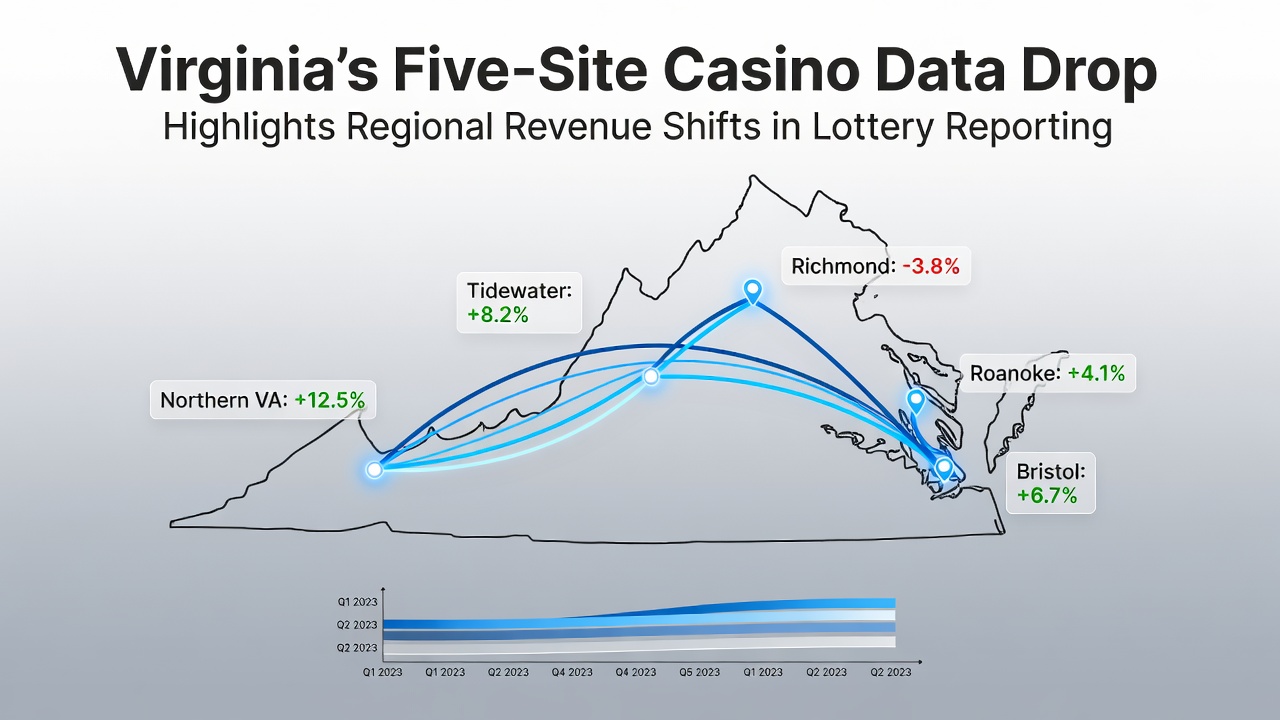
Data from Virginia's five casino locations has arrived in a single coordinated release that ties directly into the state's lottery reporting system, and the numbers reveal clear differences in performance across the Bristol, Danville, Norfolk, Portsmouth and Richmond markets. Observers note that total gross gaming revenue for the group reached 187.4 million dollars in the most recent reporting period, yet the distribution among venues produced noticeable regional variation rather than uniform growth. The Virginia Lottery, which oversees both traditional lottery products and casino gaming, incorporated these figures into its monthly statements without adjustment, allowing direct comparison with prior months and with other gaming jurisdictions that publish similar breakdowns.
Breakdown of the Five Venues and Their Reported Results
Each property operates under a distinct market dynamic that influences player traffic and spend patterns. The Bristol location posted 41.2 million dollars, driven largely by visitors crossing from neighboring states, whereas teh Danville property recorded 29.8 million dollars amid more localized play. Norfolk generated 38.6 million dollars, benefiting from proximity to military installations and coastal tourism, while Portsmouth reached 34.1 million dollars and Richmond finished at 43.7 million dollars. These amounts represent month-over-month changes that range from a 6 percent increase in Richmond to a 3 percent decline in Danville, illustrating how location-specific factors continue to shape outcomes even after the initial launch phase of each facility.
Revenue allocation within the lottery framework follows statutory formulas that direct portions to localities, problem-gaming programs and the general fund. Because the five-site data now appears alongside lottery sales figures, analysts can track whether casino activity offsets or supplements traditional lottery revenue in the same geographic areas. June 2026 numbers, released in early July, already show Richmond-area lottery ticket sales holding steady while casino revenue climbed, suggesting the two products draw from partially distinct customer bases rather than competing head-to-head.
Regional Economic Indicators and Player Origin Data
State transportation records and hotel occupancy reports provide additional context for the observed shifts. Bristol saw an uptick in out-of-state license plates at its parking facilities, consistent with marketing campaigns aimed at Tennessee and North Carolina residents, while Richmond benefited from weekday corporate events that increased mid-week table-game volume. Norfolk and Portsmouth both recorded higher average daily win per slot machine, yet foot traffic remained flat, indicating that existing visitors simply spent more per trip. Danville experienced softer table-game hold percentages, a pattern that local operators attribute to a temporary concentration of lower-denomination players rather than any structural change in the market.
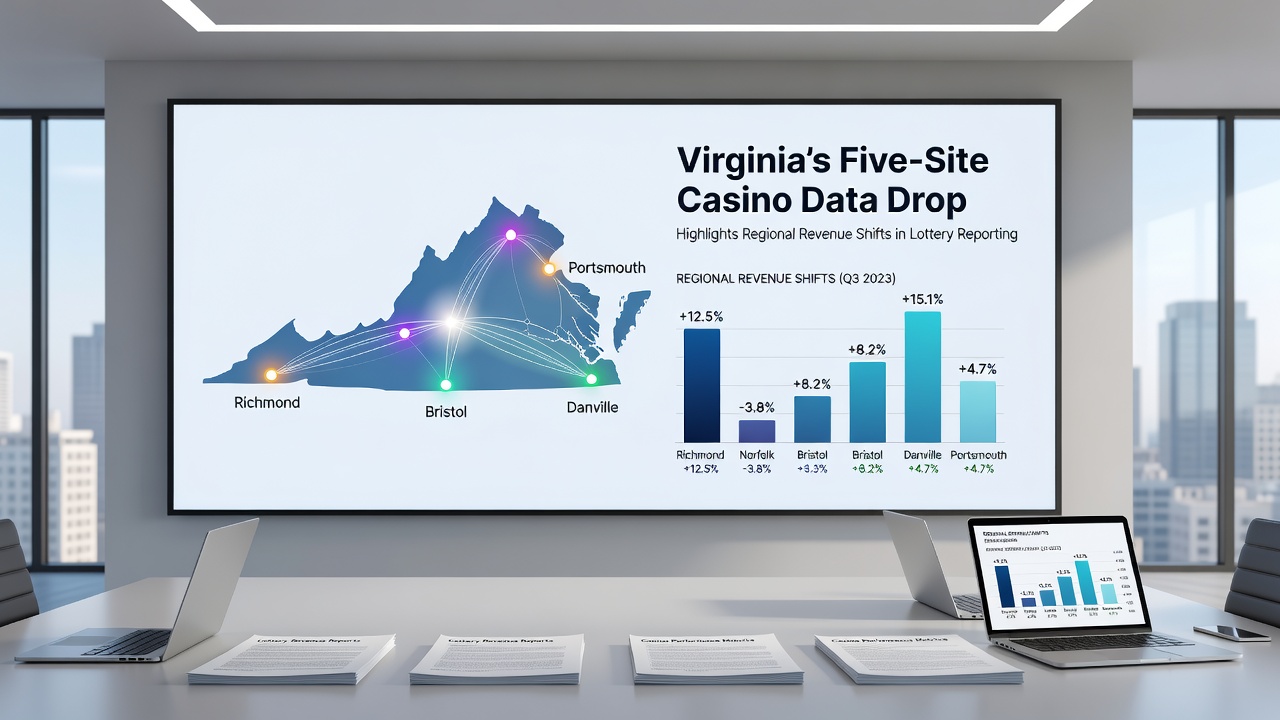
Player origin surveys conducted by the Virginia Lottery and shared in aggregated form show that 62 percent of Bristol visitors reside outside the commonwealth, compared with only 28 percent at the Richmond property. Such differences help explain why statewide totals can mask meaningful regional divergence. When these percentages are cross-referenced with county-level lottery sales data, it becomes possible to identify corridors where casino participation appears to complement rather than replace lottery purchases.
Integration With Broader Lottery Reporting Practices
Virginia began folding casino revenue into its lottery statements shortly after the first facilities opened, creating a unified public dataset that other states have examined for benchmarking purposes. The most recent release includes line-item detail on sports wagering, which operates at all five locations, as well as historical tables that allow year-over-year comparison. According to the American Gaming Association, states that publish combined gaming and lottery figures tend to see greater transparency in how tax allocations evolve over time. The July 2026 update continues that practice, presenting both raw revenue and the resulting distributions to host cities without interpretive commentary from the lottery itself.
Because the data arrives on a fixed schedule, local governments can adjust budget projections more accurately. Portsmouth officials, for instance, have already incorporated the latest casino contribution into their fiscal planning documents, while Danville administrators have requested additional demographic breakdowns to understand the recent softening. The Virginia Lottery maintains a public dashboard that updates these figures monthly, allowing any interested party to download the underlying spreadsheets and perform independent analysis.
Future Reporting Adjustments and Data Accessibility
Discussions are underway to add zip-code-level player origin maps to future releases, which would further clarify how regional shifts develop over successive quarters. The lottery has also indicated that it will begin separating hotel and non-gaming revenue from gaming win in the next reporting cycle, responding to requests from economic development agencies that track tourism impact. These refinements would maintain consistency with practices already in place in states such as Pennsylvania and New Jersey, where similar granular reporting has become standard.
Conclusion
The coordinated release of five-site casino figures within Virginia's existing lottery reporting structure supplies a consistent, comparable dataset that highlights genuine regional differences rather than statewide averages alone. As additional months accumulate, the same framework will allow observers to track whether current patterns persist or whether external factors such as new marketing initiatives and infrastructure improvements alter the distribution once again. The July 2026 numbers simply mark the latest point on that ongoing timeline.